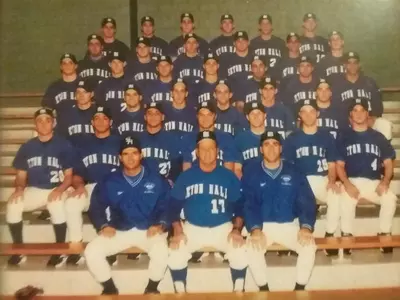
The 2000 Seton Hall Baseball Team: 20 Years Later
6/12/2020 8:10:00 AM | Baseball
The success of the 2001 BIG EAST championship team, many say, doesn't happen without the 2000 team
In sports, championships are always remembered first.
The 2001 Seton Hall baseball team that won the BIG EAST title has its celebratory pictures splattered all over record books and the school's hall of fame in the Richie Regan Athletic Center. They have two banners on the outfield wall at Mike Sheppard, Sr. Stadium at Owen T. Carroll Field; one for their conference title and one for their NCAA regional appearance.
Teams usually experience defeat and go through tough breaks before the game rewards you. A team's success doesn't come to fruition without failing at first.
The 2000 Seton Hall Pirates, many believe, was Mike Sheppard, Sr.'s best club since 1987 and they were a big reason why that the 2001 squad came out on top with a BIG EAST title. Here's a brag list from the 2000 season:
The case for the 2000 Seton Hall Pirates to be recognized as one of top teams in program history should be reviewed. The 2001 team gets the publicity, but the players and coaches that were on both teams have said that one doesn't happen without the other.
To celebrate their achievements 20 years later, the program reached out to several former players and coaches to recall stories, moments and games from 2000. We let them tell their tales in this oral history.
THE FOUNDATION
When looking at the rosters of the 2000 and 2001 teams, it's easy to see that the cornerstone of the Seton Hall baseball program during that time was the 1997 recruiting class. The players who were freshmen in 1998 eventually led Seton Hall to consecutive NCAA regional appearances, two appearances in the BIG EAST championship game and the 2001 BIG EAST title.
That class featured a walk-on that became a starting catcher (Adam Arslanian), a No. 1 starter on the mound (B.J. Benik), a dynamic middle infield tandem (shortstop Tony Calabrese and second baseman Joe Cuervo), heavy-hitting twin brothers (Kevin and Brian Leighton) and a couple of reliable arms (Shawn Tarkington and Mike Wren).
When the stud high schoolers stepped on campus, they were met with the principles and coaching philosophies of Mike Sheppard, Sr. His standards were strict; they produced championships, academic success, first-round draft picks and a lot of won ball games. Most importantly, though, his standards formed men who would put the teachings of "Shep" into practice in their daily lives.
Brian Leighton, infielder (1998-01): It was a big group, there were seven or eight of us that they brought in.
Shawn Tarkington, catcher and pitcher (1998-01): I grew up about a half hour away from the Leightons and we took our recruiting visit to Seton Hall together. We drove down and we were sitting on the steps outside of Shep's office and we said, "I'm kind of sick of doing this recruiting thing, do you want to just go here?" It was that nonchalant.
Joe Cuervo, infielder (1998-01): Myself, Tarkington, Benik, the Leighton brothers, Mike Wren, Adam Arslanian – who was a walk-on and ended up starting – Shep expected that core to take him back to a World Series. I truly believe that he thought it was his last chance to go to a World Series. We fell short but we came close.
B.J. Benik, pitcher (1998-01): Going into Seton Hall with Mike Sheppard, it's a shell shock. You initially go in and he's so tough and he has this rich tradition of winning in the Northeast … I remember when guys would come back for the old timer's game and they'd say, "you guys might not like him now but 10, 15 years down the road you're going to be thankful." I couldn't agree more.
Mike Wren, pitcher (1998-01): I was really proud of that freshman class that stuck together all the way through.
Joe Cuervo: With that class we didn't know any better. We were just a bunch of tough guys, athletes, from all over the place. That was the Seton Hall way. Get a bunch of tough, athletic guys and mold them into baseball players. It was fun.
B.J. Benik: A lot of guys failed, but the Calabreses, the Cuervos, the Tarkingtons, the Wrens, the Leighton brothers, myself, we didn't. We accepted the challenge and moved forward.
Shawn Tarkington: It wasn't necessarily about baseball it was about learning lessons for life through baseball. It was cool.
Rob Sheppard, assistant coach (1995-03): That was a special group of players. Those guys were really fired up and very competitive. In 1998 they came on and all of a sudden here we are in 2000 playing in the championship and earning the championship in 2001.
Shawn Tarkington: Those first two years – freshman and sophomore years – we underachieved a little bit and then Phil came in and saw the potential we had and wouldn't let it go to waste. He got our minds right.

B.J. Benik ranks in the top 10 in innings pitched, starts and strikeouts in program history.
MIND GAMES
A Seton Hall Athletics Hall of Famer who is still considered one of the top pitchers in program history, Phil Cundari had no interest in becoming a coach.
Once his professional baseball career ended, he was set on starting his own private practice specializing in mental skills and mental conditioning. In 1999, his former coach, Mike Sheppard, Sr., asked him about speaking to the team and putting his practice to use, serving as a quasi-consultant that season.
With the 1999 season serving his preview, Cundari made the decision to join the coaching staff full-time at his alma mater in 2000. It was a chance for him to give back to the program that meant so much to him and to give back to Shep.
B.J. Benik: Phil was probably the most influential guy on me personally.
Shawn Tarkington: He came in with an agenda to get us focused.
Mike Wren: We were told that Phil was a psychology guy and he was going to help us with the mental side of pitching and he did.
B.J. Benik: We didn't know too much about Phil. He just showed up. I didn't know what to expect but we hit it off almost immediately. He knew when to coddle and he knew when to get in your face. He was definitely a breath of fresh air and he was someone that the program needed.
Phil Cundari, pitching coach (2000-17): One of the things that helped me to engage them and connect with them was obviously Shep and RB. They allowed me to have the autonomy to express and impress as much of my experience with them. In doing that I think the players ran with it.
Casey Grimm, outfielder (2000-03): Phil was a pitching coach who treated the offense like he was still facing us. There was always this healthy competition between our offense and Phil. He would talk crap to us in intrasquad. He would throw batting practice, talk smack and try to get you out. Phil was old school Seton Hall.
Phil Cundari: As a part of the program and the culture and tradition, I was a representative of a time where we not only competed for regionals but we competed to get to a World Series. I also think the credibility of being a pro and a pitcher of the year in the conference made it easier for the guys to connect with me.
Casey Grimm: He would do these "skull sessions" on rain dates. We would go inside and he would go over these mental drills with us; visualization, how to pick up a winning attitude, how to have a healthy competitive attitude, how to have confidence in yourself.
Mike Wren: In the old shooting range – it probably doesn't exist anymore – it was this dark, dank space with a low ceiling and low lights. Phil would take us back there, have us lie on our backs and visualize. Today it's not that strange but back then we were like 'what is this guy doing?' It was a meditation. We'd meditate on pitching, on visualizing the strike zone, on the grass, everything. It was completely out of left field for all of us but it was pretty cool. I do remember thinking, "I need to be doing more of this."
Casey Grimm: As a freshman that was huge for me. I didn't know of any other team that did anything like that.
Mike Wren: Now I think it's probably standard operating procedure in most athletic organizations but Phil was pretty early on that stuff.
Phil Cundari: Those skull sessions allowed us to prepare and create that vision of a championship culture and mindset. That was my goal and that's all that I experienced at Seton Hall. Shep represented all of those things.

Mike Wren registered a 2.54 ERA in 11 starts in 2000.
A NEW SEASON
The Pirates came back to school in the fall of 1999 with a sense of urgency. The previous two seasons saw the Hall post records of 25-23 and 32-19-1. The '99 campaign ended with a loss to St. John's in the semifinals of the BIG EAST Championship, one win away from the Hall's first appearance in the finals since 1994.
Internally, the staff and players felt like 2000 was the season where the Pirates needed to get over the hump. They had a strong group of seniors, led by Alfie Critelli at first base, Damon Ponce De Leon on the mound and Ray Navarrete at third base. But after Ponce De Leon, who was going to step up for the Pirates on the mound? That and other questions lingered as fall practice opened.
B.J. Benik: The failures that we went through in '98 and '99 led us to the successes in 2000 and 2001.
Rob Sheppard: Our expectations were high. From my recollection, after the 1998 and 1999 seasons, we were playing with a lot of confidence. We had a lot of good players. We expected to win it in 2000.
Phil Cundari: We had lost quite a bit of pitching from the year before and there was one senior, Damon Ponce De Leon. Tarkington, who still caught, was not really pitching. He was a very good athlete but he wasn't on the list of pitchers. We kind of had to blend a couple of the position players and build a pitching staff. It looked like a strong staff early on but that tells you about the character of the guys who developed and came through for the team.
Jim McDermott, assistant coach (1999-00): We felt that we were solid. We had a good recruiting class coming in and we weren't sure at a couple of positions but the kids really stepped up.
Rob Sheppard: That 2000 team was a hungry team that wanted to prove themselves. Ray was the guy that epitomized the kind of team that we were. We were a really scrappy group, really tough at-bats and that was the way Ray played. He always pushed his teammates to become better.
Phil Cundari: Ray was in on every pitch. He had a great hitting approach.
Ray Navarrete, infielder (1997-00): I was taught by Coach Sheppard and Rob Sheppard that if you put in the work, you don't have to be the most talented guy with the biggest scholarship. From day one I showed up and I felt like I had something to prove to everybody.
Shawn Tarkington: Ray was an emotional guy and wore everything he had on his sleeve. There was no hiding it.
Rob Sheppard: Ray was super motivated. The Leighton brothers and Joe Cuervo were hardnosed and steady. It was a really good mix of guys.
Jim McDermott: Alfie Critelli stepped in at first base and was an RBI machine. You couldn't get Navarrete out. Casey Grimm could just hit. [Mike] Bascom batted ninth, he had 27 stolen bases. Cuervo led off, he had 37 stolen bases. We drove people crazy on the bases. Scoring runs was not a problem.
Mike Bascom, outfielder (1999-02): Running and doing the little things were always a part of Shep's philosophy. I think it kind of suited me and us as a team; trying to get into scoring position for the middle of our lineup.
Brian Leighton: Looking back on it, one through nine, it was a tough lineup to face.
Rob Sheppard: B.J. had impeccable command and he was competitive. If you gave him the ball and if he didn't stay in until the eighth or ninth inning, he felt like he had a bad outing.
Phil Cundari: Isaac [Pavlik] was money. When we had a lead, he was a shutdown closer, cleaner, you name it.
Isaac Pavlik, pitcher (1999-02): I was still so young in terms of pitching so my mindset was, "throw as hard as you can and let's go from there." I thought that was pitching! That was my mindset in college. I was having success so I thought that's what you did.
Phil Cundari: One of the strengths from that team was that the offense really picked up the pitching and allowed it throughout the course of that season to develop, to gain confidence, improve skill-wise and ultimately performance-wise on the mound. That's what a really good offense can do for you.
As players slid into their roles, the competition on the field between the talented pitching staff and the offense that would end up hitting .313 that season helped prepare the pitchers for the rigors of the BIG EAST. It was iron sharpening iron.
Casey Grimm: I hated facing our pitching staff. I looked forward to the games.
Joe Cuervo: Oh my god you talk about fun. We talked smack like you wouldn't believe.
Brian Leighton: In the fall, Saturdays and Sundays were intrasquad days. Facing those guys definitely made you better.
Joe Cuervo: Going up against B.J. he would say, "try and hit this knuckle curve." It was so much fun.
B.J. Benik: It was good hitters facing good pitching. Nobody backed down and we looked forward to that challenge every day.
Phil Cundari: That offense did enough in the fall to continue to remind us that we had a lot of work to do. Which was the best thing that could have happened.
Casey Grimm: My personal nemesis was always Isaac Pavlik. It was a sibling rivalry between me and him but he always had the upperhand and he knew it.
Brian Leighton: B.J. had such a good changeup. In those games I always looked fastball and tried to hit it or else I was dead.
B.J. Benik: Ray Navarrete was a tough out for me. I really needed to be on top of my game to get him out. It was high-level baseball.
Ray Navarrete: It made for a lot of fun; guys like Coach Sheppard, Rob and Phil stirring the pot and getting the guys riled up. It was intense and a lot of fun. I think playing against each other made our team better because we were so talented.
Out of those battles grew an undeniable team chemistry, which many credit as the reason for the team's success that season.
Jim McDermott: When you hear about teams that genuinely liked each other, these kids really liked each other. There wasn't anybody who thought that they were better than anybody else. That's something I still look back on.
Isaac Pavlik: We would all go out together. We were very close knit. There were no cliques. We were like a fraternity.
Joe Cuervo: Me and Tarkington got into a fistfight before a practice and RB had to rip us apart but we were best friends. That's just how competitive we were with each other. We were brothers.
Casey Grimm: We used to practice at night on our own. The seniors would hold practice at the batting cages down in the basement of the rec center. We'd wrap up our classes at 1 p.m., practice from 1 p.m. to four, maybe have a night class, then softball would come in after our official practice and then we'd come in after them. We'd bring a boom box, play some music, and we would take batting practice on our own. It was always Navarrete, Cuervo, Tarkington and Alfie. It was always those guys that were in there every single time and they would work with the younger guys. If I didn't have that as a freshman, my career wouldn't have ended up the way it did.
Ray Navarrete: I lived in that cage. Once I enjoyed some success I felt like it was a part of my role to take the younger guys in and not only tell them what they should do but to do it with them.

The 2000 team's leadoff hitter, Joe Cuervo stole 37 bases and hit .358 as a junior.
TRAGEDY AT BOLAND HALL
As the new millennium began, tragedy struck Seton Hall's campus where a fire broke out inside of Boland Hall early in the morning hours of January 19. There more than 50 casualties and three fatalities. One of people who tragically passed away was Frank Caltabilota, a young man who tried out for the baseball team in the fall.
The calamitous event brought the Pirates together and helped put life into perspective as they headed into a new season.
Casey Grimm: We would have morning practice at 5 a.m. which sucked. Everybody hated it. You'd be in the dorms and people would be making noise at two, three o'clock in the morning. It wasn't uncommon for people to pull the fire alarms in the middle of the night.
Brian Leighton: I lived in that dorm my freshman year and we would have early morning running in the fall. The fraternities or someone used to set off the alarms, false alarms. Everybody would have to get out of the building but in our suite with myself, my brother, Shawn Tarkington and Mike Wren, there was a rooftop outside our window, so we'd say, "screw this we have running in two hours we're not going out there." We'd hide under our beds or go out on that roof. Then the fire happened and we said "man, how lucky are we to not be in that building when this all happened." We were pretty stupid.
Casey Grimm: I can't remember what time it was, but it was early enough that we started getting dressed for practice. There was no way we were getting back in the building before morning practice so we put our blue Seton Hall sweats on and we started walking over to the rec center. Practice was going to start in an hour anyway. I'm in the room and I said, "wow, I can smell smoke." I open the door and I couldn't see across the hall. The building is shaped like an H and we were at the bottom of the H so we were right by the stairwell. We went down the stairwell, came out and it dumped us out by where the common area is between south and north Boland. We look up and we see kids hanging from the windows. Then we said, "this is no joke."
Mike Wren: It was crazy. We didn't know the extent at the time how serious it was.
Casey Grimm: Only seniors could have cars so I remember the seniors drove over, picked us all up and drove us over to their house. At the time we didn't know that it was that serious. We knew that there was a fire but we didn't know that there were fatalities. Cell phones weren't even a thing. The seniors brought us into the baseball house and they said, "call your parents, this is going to be all over the news, let them know you're okay." They did that unprompted. Looking back, I thought that was extremely responsible.
Brian Leighton: That was definitely a crazy time because campus was flooded with media trucks.
Casey Grimm: I remember watching the news and they landed a helicopter on the baseball field and we said, "hey, there's the field!" Then they started announcing fatalities and injuries and we said, "this isn't funny anymore, this is the real thing."
Rob Sheppard: It was devastating for the campus. I don't think the campus was the same for a long time after that.
Mike Wren: We found out that Frank was in there. In fall ball when guys are trying out you don't really interact a whole lot with the freshmen. I do remember that he just a good kid. When we heard that he had passed it was surreal.
Rob Sheppard: Frank Caltabilota was a really, really good young man.
Brian Leighton: Shep had t-shirts made up with Frank's name on it. Every home game we'd have those shirts with his name on the sleeve.
Mike Wren: We'd say a prayer before every game. We'd say the Hail Mary, then we'd say, "remember the old coach" [for Owen T. Carroll] and then we'd say, "Patty, Murph, Bomber." This is going back decades that Shep's contemporaries had added. We added Frank to the prayer that season.
Joe Scott, infielder (2000-03): Shep never let us forget about it. I think it hurt Shep; Seton Hall guy forever. I think it hit him hard.
SLOW BEGINNING
The 2000 season opened with the Hall's annual trip south to North Carolina and Virginia. What would be a special year started ominously as the Pirates started out with a 1-5 record. Its lone win was an 8-4 victory over UVA in Charlottesville, Va.
B.J. Benik: We were in a gym basically from Christmas until our first game pretty much. We would go down and play UNC who's been outside since January 1. It was almost like we were playing our first game and they were halfway through their season.
Shawn Tarkington: Many years we were coming out of a gym. We hadn't even made it onto a field yet and the team we were playing had a couple of games under their belt. Even though you didn't want to make an excuse, they had a clear advantage. When we came home we felt tested.
Joe Cuervo: We definitely put ourselves in a hole big time. It was funny though with that team because we had so much confidence and we were slightly arrogant. It didn't matter what the score was, we would just say, "we're going to win this no matter what." It was almost comical. We could be down a couple of runs at the end of the game and we would look at each other and say, "alright, let's go win this one, no big deal." It was so much fun.
Isaac Pavlik: We were underperforming. We had lost some games but we were nasty after that.
It wasn't until the Pirates took two games from Fairleigh Dickinson in New Jersey and went 6-1 at the Homestead Challenge in Florida that they got the season rolling. When Seton Hall was down in Florida for their annual spring break trip, a 4-3 win over Dartmouth proved to be one of its most important games from that season. The reason why, though, happened after the game.
Isaac Pavlik: Back then we would get our butts whipped when we went down to UNC. We weren't playing very well heading into spring break.
Rob Sheppard: We always seemed to turn it on once we got to Florida.
Isaac Pavlik A turning point for us in that season happened when we were in Florida and I think we had just barely beaten a team that all of the coaches thought we should've done a lot better than we did [the Pirates' 4-3 win over Dartmouth on March 17].
Rob Sheppard: Are you going to ask me about the running?
Issac Pavlik: After every game, RB would always take us down to the right field line and have us run our sprints as a team. We would run 10-15 sprints. So at the end of a hot day in Florida, we ran our 10 sprints and guys started high fiving each other thinking that we were going to go back to the hotel and enjoy the rest of the night. The Rob says, "I don't know where everyone thinks they're going. Get back on the line." So we said, "alright he must be pissed."
Rob Sheppard: It wasn't just that one game. There was a game before that where I had gotten thrown out, Joe Cuervo got thrown out, and someone else. Three of us got tossed. I don't like getting thrown out and I don't like it when they throw players out. So we play Dartmouth and we won but there were some bad attitudes.
Issac Pavlik: Next thing you know we did five more at least. All I remember was him backing up. He just kept backing up. So he started at 90 feet and then it went to, like, 120. After 120 he pushed it to 180. You can hear everyone start mumbling under their breath not saying nice things about him. We ended up running 30 sprints after we just won a game.
B.J. Benik: I remember that very clearly. I was one of the guys swearing him up and down as we were running.
Brian Leighton: He kept going further and further back, which made us more angry. I'm sure we didn't play to our potential.
Joe Cuervo: I remember that one! I have a picture of me pinned up against a fence after all of that. I feel like I'm there. I remember exactly what field it was on.
Casey Grimm: The running happened often but I remember that one.
Isaac Pavlik: It's such a vivid memory because I remember when the movie Miracle came out, sitting in the theater with my wife, and he kept blowing the whistle saying "again, again" and they kept doing suicide after suicide. I remember sitting in the theater getting choked up because it was such an amazing, vivid memory.
Shawn Tarkington: After living through that and watching the move Miracle I said to myself, "I lived this." We were out in a little side field and RB kept saying, "again! Again!"
B.J. Benik: It was something that you didn't appreciate in that moment because, hey, we won. It was an ugly win but I get where he was coming from. We should've won by a dozen runs. In the eyes of an 18, 19-year-old kid versus a 41-year old man, your perspectives are a little different. Going back to New Jersey, we kind of took that anger that he had created and we used it to work harder and never do that again. We showed him that whatever you throw at us, we can take it and we'll be better.
Rob Sheppard: We probably couldn't have done that with a group that wasn't as mentally tough or talented. That's a compliment to the kind of makeup they had.
Ray Navarrete: Some teams would complain and say, "this is terrible." Our team did the opposite. We wanted to show the coaches that we were better than the way we were playing and we didn't want to deal with any extra running anymore. So we're going to start balling and that's what we did.
The next day, the Pirates beat St. Francis (N.Y.), 16-3, in seven innings to wrap up their spring break trip. They returned to New Jersey with a 9-6 record.

Isaac Pavlik had six saves and struck out 36 batters in 29.1 innings as the team's closer in 2000.
RIVALRY RENEWED
Seton Hall stood at 26-12 overall and 10-6 in the BIG EAST with series victories over Georgetown, Villanova, Boston College and Pitt leading up to its first clash of the season with in-state foe Rutgers.
The two programs at that time were considered the top teams in the Northeast. They featured two legendary coaches (Seton Hall's Mike Sheppard, Sr., and Rutgers' Fred Hill) and oodles of talent (Seton Hall's Ray Navarrete, Alfie Critelli and B.J. Benik going up against Rutgers' David DeJesus, Darren Fenster and Bobby Brownlie). With intrastate bragging rights at stake, the Pirates and the Scarlet Knights were also battling for BIG EAST supremacy.
Ray Navarrete: Every college has one; that team that you have the utmost respect for but at the same time you can't stand because they're your rival. They're your rival so much that they're a mirror of who you are. That Rutgers team was unbelievable.
Joe Cuervo: Here was the thing about Rutgers: we all knew each other. That's what made those games even more intense. The names on the uniforms could have been totally switched. They would come hang out with us at Seton Hall and we would go hang out at their campus. But on the field we hated each other. It was fun.
Mike Wren: We did not like those guys. We didn't want to lose to them. It was intense. There was not a lot of messing around in the bullpen during those games because you didn't want anyone to think that you weren't keyed in during those games.
Casey Grimm: Those games were always close. Always tense. It was a great rivalry.
Phil Cundari: Rutgers hosted a regional that year, which shows how good they were. In the Northeast you just don't host regionals.
Casey Grimm: A lot of our guys played high school ball with the guys that went to Rutgers or they even played on the same team. It was almost like an extension of high school.
Phil Cundari: Every game was a battle. Their offense was just as good if not better than ours.
Rutgers opened the series at Owen T. Carroll Field with a 5-1 victory in the first game of a doubleheader. The Hall trailed in the second game, 5-4, entering the bottom of eighth but, as they seemed to do frequently that season, the Pirates plated three runs to take a 7-5 lead. Damon Ponce De Leon threw a complete game on the mound and helped force the rubber game on April 30.
The next day, B.J. Benik struck out 13 batters in eight innings of work. It was another game where the Pirates faced a deficit – 5-3 this time going into the eighth inning. The relentless Pirate offense scored four runs with two outs to give themselves a 7-5 lead and the series victory.
B.J. Benik: I always wanted the ball in the big game when the opportunity presented itself. I loved pitching against those guys. There was a lot of bantering back and forth.
Shawn Tarkington: A couple of the games that Benik threw against Rutgers that year were great battles.
B.J. Benik: Rutgers was on a winning streak against us going into that series. They would basically show up and they'd beat us. We'd have to hear the frustrations from the coaches. From the time I got there, Rutgers was, at least in the eyes of the media and others, the team in New Jersey. In the game I pitched against them, my knuckle curve was really on. I remember being ultra-focused and being in the moment saying, "not only do I think we're better than them, but we're moving in another direction from Rutgers." Now it was, "we should take two out of three from these guys, we should sweep these guys." You could start to see that with some of the other players.
Phil Cundari: That's when the confidence really kicked in and the guys started to believe on a higher level. Up until then I was taken aback about how the guys had a lot of respect for the Rutgers program. Sometimes there's a fine line between respecting and fearing your opponent. That series changed that.
Ray Navarrete: To go out and take two out of three from those guys was another notch in our belt. We said, "let's keep this thing rolling."

After spending time at catcher and other positions early in his career, Shawn Tarkington settled in on the mound in 2000 where he went 6-3.
A TRIP TO THE MIDWEST
The Pirates won their next four games – including a three-game sweep of West Virginia – before heading to the Midwest to face perennial power Oklahoma State. The Cowboys were coming off a College World Series appearance in 1999 and they had won six straight games entering the two-game series with the Pirates.
Both games were played at two-year old Bricktown Ballpark in Oklahoma City, home of the Los Angeles Dodgers' Triple A club. At 32-14, this was the Pirates' last chance to bolster their NCAA Tournament resume with a pivotal victory over a non-conference opponent.
Ray Navarrete: There was a lot of excitement and anticipation. We were all buying in to who we were and what kind of season we were having. We knew that there were people who were going to make at-large decisions for regionals and they would say, "they're taking care of business in their area and their conference, but can they play national powerhouse teams and do it on the road?" We were excited to hop on a plane and go out there.
Rob Sheppard: That was a big deal for us. Coach [Tom] Holliday knew my dad for years and they needed someone to play in the middle of the week. It didn't cost us very much and they said, "come out and play two games." They basically paid for everything but we could only take 25 people and that included the coaches.
B.J. Benik: I actually didn't go. I wasn't going to pitch. I remember Shep and Phil pulled me to the side and they asked if I would be offended if I didn't go. It actually gave me an opportunity to rest and reload knowing that I wasn't going to pitch.
Shawn Tarkington: I had gotten into trouble so I was left home. I don't even think I told my mother that.
Jim McDermott: They flew out with a limited number of kids, I stayed behind and ran practice. Cuervo and Calabrese stayed back so Shep goes out and plays Chris Carter at short and Josh Shuck at second.
Phil Cundari: We went out there with a skeleton crew. That series further solidified the identity of the guys as grinders.
Brian Leighton: After dinner one night, RB took some of us to the Oklahoma City bombing memorial. It sunk in right there. You say to yourself that baseball has brought you all over the country and it's taken me here. I was pretty grateful. That was something that stuck with me for a while.
Isaac Pavlik: I had never been to the middle of the country. It was a shock. That was my first taste of playing in a really amazing ballpark.
Casey Grimm: It was a beautiful stadium. Being at a small school like Seton Hall in New Jersey, playing these nationally recognized schools with big football programs, TV contracts, you'd go there and you'd be in awe of their facilities, their equipment, but it made it even more fun to beat those guys. Here's this school that's going to fly halfway across the country and beat them. It always seemed like it meant more to us than it did to them. That was a year with that team that we could match up pound-for-pound with those bigger schools.
In a back and forth affair, the Hall dropped the first game, 8-6, on May 9. The Pirates jumped out to a 1-0 lead early and led 4-3 entering the bottom of the fifth but the Cowboys pushed across three runs, making it 6-4, to go ahead for good.
The second game was a different story. Seton Hall stomped Oklahoma State, 9-3, to earn a split of the series. The Pirates got the critical non-conference win that their resume needed.
Ray Navarrete: I remember the stadium and I remember the crowd. That was the biggest crowd that we played in front of that season and they were extremely loud.
Rob Sheppard: Sometimes you go to places and they overlook you a little bit. We came out for the second game and we beat them pretty good.
Casey Grimm: I hit my first home run there, the only one of my freshman year. I hit it, I wasn't expecting anything and it just kind of took off. I saw everyone stop and the umpire signaled for a home run! Before I hit second base, I looked up at the Titantron and I saw myself running on a live feed. I'm watching that and not the base and I almost missed second base.
Joe Cuervo: I remember Tony [Calabrese] and I were watching or listening to them win on the computer in our dorms. When we won we were so fired up.
Brian Leighton: We beat them in the second game and that late in the season, playing such a tough opponent, that got us to say that we were a pretty good team.
Rob Sheppard: We should've won both but we ended up winning the second one and that's what put us on the radar from an RPI standpoint. Playing two games like that late in the season and getting to 40 wins is what gave us the opportunity to play in a regional.
Ray Navarrete: 20 years later, I believe if we don't do what we did at Oklahoma State, and we come up short 1-0 in the BIG EAST Championship, we don't get an at-large bid. That was our moment. For us to get on the plane, to do what we did, we felt really good heading into the tail end of the season.

Brian Leighton ranked second on the 2000 team with six home runs.
TOURNAMENT TIME
After its trip to Oklahoma City, Seton Hall returned to the Northeast and swept St. John's in Queens to finish the regular season 36-14 and 18-7 in the BIG EAST. The Pirates finished in a tie for second in the conference standings with Notre Dame and Rutgers finished first with a record of 18-5. The Pirates were seeded third due to Notre Dame winning the season series.
The location of the tournament – Somerset Ballpark in Bridgewater, N.J. – proved to be the perfect backdrop for a renewal of the fierce in-state rivalry between Seton Hall and Rutgers.
Rob Sheppard: The 2000 BIG EAST Tournament was the most exciting tournament that I have been a part of.
Isaac Pavlik: When we entered the BIG EAST Tournament, the guys were chomping at the bit.
B.J. Benik: Somerset was an awesome stadium to play in. There were a good amount of fans from every team.
Rob Sheppard: We anticipated going in there and winning it. I know our guys were really excited.
Jim McDermott: That tournament was rainout after rainout. Games were getting pushed back and forth but the "Old Man" was a master with the mind. He could get those kids ready to go. He knew what to say and how to say it to the kids and they trusted him.
Despite the prolonged weather delays, the Pirates defeated Connecticut in the first round on May 17, 8-2, and followed up that performance with a 12-4 win over Boston College on May 18. That set the stage for the first of three games against Rutgers at the 2000 BIG EAST Championship.
The Scarlet Knights would take the first game, 6-2, knocking the Pirates out of the main bracket. Thanks to Boston College, Notre Dame had been eliminated, preventing the Pirates from possibly facing BIG EAST Pitcher of the Year and future first-rounder and Aaron Heilman in an elimination game.
Still, the Pirates had to win two games on the same day to get to the title game. First up was an Saturday afternoon rematch with Boston College. With the Pirates trailing 2-1 going into the bottom of the fourth, Alfie Critelli – who was named second-team All-BIG EAST and was a third-team All-American that season – hit a go-ahead three-run home run to give the Hall a 4-2 lead. Damon Ponce De Leon picked up the win and Isaac Pavlik recorded a five-out save.
The Pirates would have to beat Rutgers later that day to force a winner-take-all championship game on Sunday, May 21. And they would have to do without Ray Navarrete.
Ray Navarrete: I have never and will never complain about an injury. I was fortunate to be healthy 99.9 percent of my time wearing that uniform but unfortunately I did have a hamstring blowout in the Boston College game in the BIG EAST Tournament which led to me missing my only game of the season the following game. I was hustling out an infield groundball. Knowing myself, like a ridiculously stupid person, I probably lunged for the bag like Coach Sheppard always told us not to do, and as I was reaching out I felt something pop. When it comes to a hamstring, it feels like a shotgun goes off in your leg.
Joe Scott: In 2000 I was a freshman and I was behind Ray Navarrete. He would call me his protégé.
Ray Navarrete: But once again, a testament to how amazing our team was, not only did we come out and win but one of my best friends to this day, Joe Scott, played for me that day against Rutgers at third base.
Joe Scott: I was excited about it. To be a freshman playing in a big game like that and contribute, it was exciting.
Jim McDermott: When we lost that first game to Rutgers, most of the kids were like, "we're going to see them again." We felt good with what we had going on the mound. You get to tournament time, you have to have deep pitching and we knew we had deep pitching.
Rob Sheppard: Brett Hoffman was a freshman and up until that Rutgers game only had two or three starts that season. We needed him because we knew that we needed to save B.J. if we played the next day. I think that's what made that night so exciting. We knew we had B.J. for the championship, we just needed to get there.
Hoffman did his part by allowing only one earned run in eight innings of work. Despite his heroics, costly Seton Hall errors gave Rutgers a 3-1 lead entering the bottom of the eighth. This is where Mike Sheppard, Sr.'s philosophy of manufacturing runs and small ball came into play.
Mike Bascom led off the inning by getting hit with a pitch. Joe Cuervo followed up with a single to give the Hall runners on first and second. That's when an unlikely bunter saved the Pirates' season.
Casey Grimm: My nickname in the minors was "The Human Rain Delay".
Rob Sheppard: Before an inning would start, we would always have some type of communication going over different scenarios that may pop up. You got a power hitter behind Grimm [Alfie Critelli], the only fear you have is they walk him to load the bases. Other than that, you're putting your best hitter in a position where you could tie it. The thing was, Bascom and Cuervo were two of the fastest guys in the conference at that time too.
Joe Cuervo: Casey was not fast. Thank God he was behind me and not in front of me. That would have killed a lot of rallies.
Isaac Pavlik: Yeah, Casey was not the fastest. Unbelievable hitter, but not the fastest.
Jim McDermott: If there's a race between a steamroller and Casey Grimm, it could be a photo finish at times.
Rob Sheppard: Casey wasn't known for his speed. In fact he was really slow. Because of his numbers they didn't anticipate him bunting for a hit.
Casey Grimm: I don't even remember the bunt. Usually as a lefthanded hitter, I would try and hit that hole between first and second with a runner on. That's what I always tried to do to move the runner over.
Casey Grimm, who finished the year with a .350 batting average, dropped a bunt single to load the bases. Alfie Critelli then stepped up to the plate and tied up the game at 3-3 with a two RBI single. With one out, Brian Leighton delivered the go-ahead RBI base hit.
Brian Leighton: I don't remember a lot of the things that happened. I remember the practices, the team struggles, the camaraderie, that type of stuff. I remember going to Bunny's. I remember all of that. I don't remember getting a game-winning hit.
B.J. Benik: It was fitting that it was us and Rutgers in the finals.
Rob Sheppard: Here we are playing in Somerset County and you have the two New Jersey teams battling it out for the championship. We force a winner-take-all game and I thought it was really exciting. It was a great college baseball atmosphere with two of the best teams in the state, if not the East Coast.

As a freshman, Casey Grimm played in 54 games, started in 49, and hit .350 with 36 RBI.
THE CHAMPIONSHIP GAME
For the second time that season, Rutgers and Seton Hall would play a rubber game.
The championship game took place at noon on Sunday, May 21. The Hall's choice to go with freshman Brett Hoffman in the elimination game against the Scarlet Knights the previous day went in their favor. It would be B.J. Benik going up against Rutgers' Bobby Brownlie – a future first-round draft pick – for the BIG EAST title. Two New Jersey natives representing the state's top two teams in Bridgewater.
Jim McDermott: The championship game was on a Sunday afternoon and it was a great atmosphere. Everybody knew that you had the two best pitchers in the Northeast going at it in Benik and Brownlie. Quality pitch after quality pitch and great defense in the game as well.
Ray Navarrete: That atmosphere was as electric as we were going to get. You couldn't have written it any better for a movie.
Casey Grimm: That was a great matchup, Benik and Brownlie. They both pitched a similar style; both power pitchers and they had a spiked curve. With those two, it was almost like who had the better spiked curve? That thing was untouchable no matter who threw it.
Phil Cundari: Earlier in the year in that series against Rutgers, B.J. cemented that he could pitch to that lineup and really scared that lineup. After beating Rutgers the night before and knowing that Benik was on the mound the next day, based on what he had done earlier, we were extremely confident with who we had going. Obviously, Rutgers was pretty confident with who they had going too. It was a great matchup.
Brian Leighton: We knew we were going to face Brownlie and we had to play our best baseball.
Ray Navarrete: I had envisioned that game and that day my entire Seton Hall career.
After missing the previous game due to a hamstring injury suffered in the elimination game against Boston College, Ray Navarrete was in the lineup but not fully healthy.
The matchup between Benik and Brownlie was as advertised. Rutgers pushed a run across on a sacrifice fly in the second inning that made it 1-0. The Pirates threatened in a couple of innings but they couldn't get to Brownlie.
B.J. Benik: Bobby Brownlie was one heck of a pitcher and we went toe-to-toe. Thinking about it now, I enjoyed the moment and I enjoyed being there.
Isaac Pavlik: I was getting loose on the sidelines in the eighth or the ninth. I thought to myself, "we're going to tie this up or take the lead and I'm going to come in and close this out."
Jim McDermott: Most kids would not keep playing the way Navarrete's leg was. He was only jogging 80 percent, couldn't cut it loose.
Then came the ninth inning. The Scarlet Knights were holding on to their 1-0 lead and Brownlie was still on the mound. Tony Calabrese led off with a single up the middle, his second hit of the day. Casey Grimm then stepped to the plate. He squared up to bunt, hoping to move the runner over or reach first safely like he did against Rutgers in the previous round. Instead, he popped up to third baseman Jake Daubert for the first out of the inning.
Casey Grimm: The only thing I remember that year from the tournament was when I botched a sacrifice bunt in the championship game. I missed the bunt that failed to move the runner from first to second. The at-bat before that, I hit a ball that went over the fence but went foul about two feet.
WRSU Rutgers student radio broadcast: "1-0 pitch from Brownlie, swung on and hit high in the air, skied out to left field, coming over is Cirone, towards the wall and it will clear the wall but foul! Foul about four feet down the left field line. Four feet the other direction towards the center of the field and it would've been a home run."
B.J. Benik: Casey was a very quiet young man and he was disappointed that he had popped it up.
The Pirates were down to their final out but Brian Leighton kept the rally alive with a single. Calabrese was able to move from first to third on the base hit. With two outs, runners on first and third and Seton Hall down by a run, Ray Navarrete went to bat.
Ray Navarrete: Looking back, I must've done a really good sales job to the coaching staff to get me in there. I was listening to the game the other night and they described the way I was running as very disheartening and very slow. I must've been in bad shape as far as running. I usually batted second but in that championship game I batted seventh or eighth. It's ironic how it played out that I came up in the ninth inning in that spot in the lineup. I remember saying to myself, "this is exactly what I pictured my whole life, this is meant to be, this is why I got hurt two days ago, don't feel sorry for yourself because you're in this spot now and I'm about to tie the game."
Phil Cundari: Coming off his bat, I knew it was hit hard.
B.J. Benik: I thought that he hit hard. All I'm doing is watching it and it's going in slow motion for me.
Ray Navarrete: I had a typical at-bat I believe. I hit the ball on the nose and, from what I recall, it was a sharp shot that if it went a foot or two to the glove side of Jake Daubert, it's a base hit to left. Unfortunately, it wasn't. I remember when I hit it I said, "there it is, a base hit."
Phil Cundari: You're talking about Ray Navarrete, who battled every at-bat that season. What just looks like a fielder's choice was a ball hit very hard and their third baseman made a pretty good play on it.
Rutgers' Jake Daubert fielded the ball and tossed it second base for the force out, ending the game and giving Rutgers the BIG EAST championship.
Rob Sheppard: I remember kind of consoling Ray more than anything because I know how hard he worked and how badly he wanted to win a championship his senior year.
Phil Cundari: Those were the guys that you wanted up in that situation.
Casey Grimm: I cried in the locker room. I was in tears. That was the longest half hour bus ride back to Seton Hall. I felt personal responsibility and I felt sick to my stomach.
Ray Navarrete: The Rutgers dugout was on the first base side, so not only did I not come through but I was in the middle of the baseline when the Rutgers dugout ran through me. It was a very, very tough pill to swallow and very hard to watch.
B.J. Benik: If a run comes across there then we're in business. Momentum was in our favor, I felt strong, I felt that I could pitch longer. It was one of those things where we were an inch away from winning. We wanted the seniors to have that ring.
Ray Navarrete: We lost to Rutgers who was a championship team. We lost to a pitcher who, arguably, besides Aaron Heilman, was the best in the conference and in the country in Bobby Brownlie. We lost to one of the greatest coaches in college baseball.
B.J. Benik: In that scenario, if I had to pick who I would've wanted up with two outs down by one run in the ninth inning against Rutgers I would have picked Ray all day long.
Shawn Tarkington: When we lost, Ray thought his career might've been done at that point. He wasn't the tools guy that was going to get drafted high. What was probably going through his head was, "this may be it." And we could tell because he was such an emotional guy. I know we felt for them.
Brian Leighton: We were so heartbroken because we knew that senior class was going to be missed. In that moment we thought to ourselves ,"are we going to get this opportunity next year? Are we going to get to regionals?" To win the BIG EAST was one of our major goals and I think in that moment we were just devastated.
Mike Wren: We were pretty low. Shep and Freddy Hill were good buddies but I knew he didn't want to lose to Fred. It was demoralizing. We knew that they were good but we knew how good we were too. There was a feeling that year that that was our year. We felt like we blew it. That was it.
Casey Grimm: We go back to campus and the silver lining was, "hey, we won 40 games, that might qualify us for an at-large bid to the NCAA Tournament."

Ray Navarrete, Seton Hall's emotional leader in 2000, hit .350 with three home runs, 43 RBI and a .500 slugging percentage.
NEW SEASON, NEW RESPONSIBILITIES
With the automatic bid to the NCAA Tournament now out of reach, Seton Hall's resume would have to speak for itself with the selection committee.
Rob Sheppard: We played in the BIG EAST championship game, we lose, we get back to campus and everyone was saying, "you're still going to get an at-large."
B.J. Benik: 40 wins, losing 1-0 in the BIG EAST championship game, beating Oklahoma State, there have been crazier things but we were confident that we were going to regionals. At least I was. Some of the guys were quieter and I was one of the louder ones saying, "we're in."
Jim McDermott: If I'm not mistaken, Shep said "hey, we're going to find out the following Monday if we'll be able to get in. I think we're deserving." At that point we were climbing up the rankings a little bit.
Shawn Tarkington: Most of us were pretty confident sitting in that room waiting to see where we would be going.
Casey Grimm: It was in the trainer's office. They set up a TV for us and ESPN was going to reveal the bracket. We go in as a team, we sit down and say, "we could still continue our season, get a shot at a regional, or we could get kicked while we're down and we don't get anything."
Seton Hall was one of – some say they were the first – at-large teams off the board. The Pirates were selected as the No. 3 seed in the Columbia Regional, hosted by South Carolina. The Gamecocks spent most of that season ranked first in the country and entered the tournament with a record of 52-8. Wake Forest was the No. 2 seed and Liberty was seeded fourth.
It marked the program's first regional appearance in 13 years.
Mike Sheppard, Sr., head coach (1973-03) [SHUPirates.com press release]: This is a great accomplishment for our team. We are looking forward to continuing our season against some very strong competition in South Carolina.
Isaac Pavlik: I remember the first team to get an at-large bid was us. ESPN went on at 2 o'clock and at 2:03 p.m. our team was announced. We got put in a regional with the best team in the country.
Joe Cuervo: We were definitely one of the first teams announced.
Casey Grimm: I wasn't even ready for it! I wasn't even paying attention and then the room just erupts. That was a huge boost after the fact. I don't know how I would've felt that offseason if the season had ended on that day.
Brian Leighton: For the program, to come out of it with an at-large bid, it made us feel like we had something going.
Rob Sheppard: I think the fact that we forced the winner-take-all game which gave us 40 wins was the determining factor. If we lose to Rutgers in that first game we don't make it to the regional.
Isaac Pavlik: It was South Carolina, the best team in the country up to that point that had 52 wins that season, Wake Forest, Liberty and us. Once the excitement wore down, all of us in the clubhouse said "what kind of crap is this?!"
Rob Sheppard: In 2000 there wasn't as much information available as there is today. Being a Northeast team your resume had to be much better than the other schools around the country.
Mike Wren: We found out that we were going to a regional and that was cool. But man, we didn't go to practice, do our workouts and say, "we're doing this so we can get to regionals." We just talked about the BIG EAST championship. That was the rallying cry and we felt like that was the year. That was tough.
Amidst the all of emotions – still raw from the loss in the BIG EAST final and the elation for an extended season –Rob Sheppard's wife, Kelly, was pregnant with their first son, Bobby, and it was only a matter of time before she would give birth. It was important for Sheppard to be there with his wife for one of life's special moments.
With Sheppard staying back in New Jersey, Jim McDermott would coach third base and Phil Cundari would coach first for the regionals.
Rob Sheppard: I remember we got in and I said, "I can't go." I'll never forget it, Ray acted like someone kicked his dog.
Ray Navarrete: Of course looking back now I understood! Took the birth of my first child 20 years later to understand why he couldn't go to the regional.
B.J. Benik: Your perspectives as a young man to someone twice that age is you don't quite understand the importance of having a child. Nobody was mad but the fluidness of the team was different. Things were handled differently. If I'm RB I'm obviously doing the same thing. No doubt about it. In the moment, nobody was mad, it was just different.
Phil Cundari: I think everybody wanted to step up and show that it wasn't going to impact our play on the field. Everybody knew their role and what they needed to do.
Jim McDermott: It was a little different but we tried to make everything seem the same for the boys.
Mike Wren: I do think it was a strange time. Having RB out it was like, "what are we going to do? Who's coaching third?" That was weird. Not that it was an excuse.
Rob Sheppard: Bobby was born on May 25th. Ray calls me sometime before the Wake Forest game and he says, "congratulations on the baby! How's Kelly doing?" And then he says, "when are you coming down?!" I said, "Ray, I can't come down!" He said, "why not? The baby was born!" He couldn't understand that.
Ray Navarrete: I did my best to convince him to catch a flight and I totally understood of course. RB was my guy. He challenged me at other levels that other players might not have been able to handle. I think whatever success I had was a reflection on him and how great of a young coach he was.
Rob Sheppard: I would have loved to have been at the regional but I definitely made the right decision in sharing in the birth of my son.
BUILDING FOR THE FUTURE
The Pirates took two losses down in Columbia to Wake Forest and Liberty. They finished the year with a record of 40-18 – the last Seton Hall team to win 40 games. It was an abrupt end to an otherwise successful season.
Ray Navarrete: We were assigned a very tough bracket. We were hoping for a different one. But we got off of that plane and we were pumped.
Phil Cundari: Once we lost the first game to Wake Forest, I think that's where we really missed Rob. Rob had a really good way of keeping guys connected regardless of the outcome.
Rob Sheppard: I think WSOU [Seton Hall student radio] was there but honestly it was hard to listen for me. I remember deciding not to listen because I would've been going crazy. I locked myself in the hospital with my wife and son.
Ray Navarrete: Every day it was something different. It was losing a heartbreaker; are we going to get selected; is Ray going to be okay; Rob isn't coming with us; we get the bracket that was crazy with South Carolina. We just didn't perform.
Phil Cundari: It was my first year and Rob was the glue in the coaching staff. He was an extension of Shep in so many ways. After that first loss it was tough to overcome. The position players were a little bit at a loss without RB there and that's natural.
Joe Cuervo: We lost our focus. You look back at it as a lost opportunity because that team was stupid with talent.
B.J. Benik: We gave it everything we had and it just wasn't meant to be. I thought we would've had a better showing but it's a long season, man. It grinds you down.
Isaac Pavlik: After losing the BIG EAST, I think if we had matched up differently in the regional we would've competed differently.
B.J. Benik [postgame press conference vs. Liberty]: When you lose a game when people have high expectations, it's disappointing.
Mike Sheppard, Sr. [postgame press conference vs. Liberty]: My hat is off to Liberty. I like their style of play. I think they are going to be a real factor in this tournament.
Rob Sheppard: I felt bad for the seniors. I felt bad for them because they played their hearts out. We have 40-win season and we did make it to a regional but we were the runner-up.
The consensus from the players that played on both teams was that the uber talented 2000 team was better than the 2001 squad that won the BIG EAST championship and won two games in the NCAA Tournament. Regardless, the fruits of the 2001 campaign does not happen without the labors of 2000.
Shawn Tarkington: It was a special team and I'm glad that it's getting a little press and not totally being overlooked. A lot of our success our senior year [2001] was because we were tested our junior year. We owe a lot of it to that 2000 team.
Rob Sheppard: I think the guys that had the experience of playing in the championship game the year before definitely lit a fire and motivated us for 2001.
Phil Cundari: 2001 became unfinished business for the program.
Isaac Pavlik: In 2001 we just clicked at the right time.
Casey Grimm: Something clicked and we just got hot for two weeks in 2001. The 2000 team was more consistent than 2001. More talented. The following year we just got hot at the right time and we reaped the benefits with a championship ring.
B.J. Benik: It's funny I've been watching, and I'm sure the other guys on that team have been watching, The Last Dance. When Michael Jordan came back and lost to Orlando and had such a chip on his shoulder to win it next season, that's kind of the way we were going from 2000 into 2001.
Mike Wren: Seton Hall is Seton Hall. We all went there because of what Shep built and we wanted to be a part of that. 2000 though was the year you saw the talent at its peak at the school. It was unreal the talent we had.
Joe Cuervo: What we always said back then was, "you have to go through hell to get to heaven." Back then we didn't have matching uniform numbers on our home and away jerseys. We would go out and rake our positions and pull tarp up. Guys like B.J. would yell at the AD or the SID to include the BIG EAST Tournament and NCAA regionals on the schedule poster. Just simple, little things that the guys on the team pushed for. To see now what that field is like on campus, with the turf and the stadium, to see what it is now 20 years later is ridiculous. We all wanted that, we pushed for it. It's very exciting stuff.

Mission complete. Joe Cuervo, Mike Wren, B.J. Benik and Shawn Tarkington get revenge by winning the 2001 BIG EAST championship.
The 2001 Seton Hall baseball team that won the BIG EAST title has its celebratory pictures splattered all over record books and the school's hall of fame in the Richie Regan Athletic Center. They have two banners on the outfield wall at Mike Sheppard, Sr. Stadium at Owen T. Carroll Field; one for their conference title and one for their NCAA regional appearance.
Teams usually experience defeat and go through tough breaks before the game rewards you. A team's success doesn't come to fruition without failing at first.
The 2000 Seton Hall Pirates, many believe, was Mike Sheppard, Sr.'s best club since 1987 and they were a big reason why that the 2001 squad came out on top with a BIG EAST title. Here's a brag list from the 2000 season:
- The 2000 team won 40 games, making them the last Seton Hall squad to reach the 40-win plateau.
- At the time, the 2000 team was first Seton Hall team to win 40 games since 1987.
- They are one of only five teams in program history to win 40 games.
- The 2000 team earned an at-large bid to the NCAA Tournament, which is always a noteworthy accomplishment for schools competing in the Northeast.
- The Pirates made their fifth appearance in the BIG EAST championship game, their first since 1994.
- The Pirates didn't lose a midweek game the entire season, finishing 10-0 in those games. If you include its the midweek miniseries at Oklahoma State, the Hall went 11-1 in midweek contests.
- During the season, head coach Mike Sheppard, Sr. won his 900th career game and his 200th BIG EAST contest.
The case for the 2000 Seton Hall Pirates to be recognized as one of top teams in program history should be reviewed. The 2001 team gets the publicity, but the players and coaches that were on both teams have said that one doesn't happen without the other.
To celebrate their achievements 20 years later, the program reached out to several former players and coaches to recall stories, moments and games from 2000. We let them tell their tales in this oral history.
THE FOUNDATION
When looking at the rosters of the 2000 and 2001 teams, it's easy to see that the cornerstone of the Seton Hall baseball program during that time was the 1997 recruiting class. The players who were freshmen in 1998 eventually led Seton Hall to consecutive NCAA regional appearances, two appearances in the BIG EAST championship game and the 2001 BIG EAST title.
That class featured a walk-on that became a starting catcher (Adam Arslanian), a No. 1 starter on the mound (B.J. Benik), a dynamic middle infield tandem (shortstop Tony Calabrese and second baseman Joe Cuervo), heavy-hitting twin brothers (Kevin and Brian Leighton) and a couple of reliable arms (Shawn Tarkington and Mike Wren).
When the stud high schoolers stepped on campus, they were met with the principles and coaching philosophies of Mike Sheppard, Sr. His standards were strict; they produced championships, academic success, first-round draft picks and a lot of won ball games. Most importantly, though, his standards formed men who would put the teachings of "Shep" into practice in their daily lives.
Brian Leighton, infielder (1998-01): It was a big group, there were seven or eight of us that they brought in.
Shawn Tarkington, catcher and pitcher (1998-01): I grew up about a half hour away from the Leightons and we took our recruiting visit to Seton Hall together. We drove down and we were sitting on the steps outside of Shep's office and we said, "I'm kind of sick of doing this recruiting thing, do you want to just go here?" It was that nonchalant.
Joe Cuervo, infielder (1998-01): Myself, Tarkington, Benik, the Leighton brothers, Mike Wren, Adam Arslanian – who was a walk-on and ended up starting – Shep expected that core to take him back to a World Series. I truly believe that he thought it was his last chance to go to a World Series. We fell short but we came close.
B.J. Benik, pitcher (1998-01): Going into Seton Hall with Mike Sheppard, it's a shell shock. You initially go in and he's so tough and he has this rich tradition of winning in the Northeast … I remember when guys would come back for the old timer's game and they'd say, "you guys might not like him now but 10, 15 years down the road you're going to be thankful." I couldn't agree more.
Mike Wren, pitcher (1998-01): I was really proud of that freshman class that stuck together all the way through.
Joe Cuervo: With that class we didn't know any better. We were just a bunch of tough guys, athletes, from all over the place. That was the Seton Hall way. Get a bunch of tough, athletic guys and mold them into baseball players. It was fun.
B.J. Benik: A lot of guys failed, but the Calabreses, the Cuervos, the Tarkingtons, the Wrens, the Leighton brothers, myself, we didn't. We accepted the challenge and moved forward.
Shawn Tarkington: It wasn't necessarily about baseball it was about learning lessons for life through baseball. It was cool.
Rob Sheppard, assistant coach (1995-03): That was a special group of players. Those guys were really fired up and very competitive. In 1998 they came on and all of a sudden here we are in 2000 playing in the championship and earning the championship in 2001.
Shawn Tarkington: Those first two years – freshman and sophomore years – we underachieved a little bit and then Phil came in and saw the potential we had and wouldn't let it go to waste. He got our minds right.
B.J. Benik ranks in the top 10 in innings pitched, starts and strikeouts in program history.
MIND GAMES
A Seton Hall Athletics Hall of Famer who is still considered one of the top pitchers in program history, Phil Cundari had no interest in becoming a coach.
Once his professional baseball career ended, he was set on starting his own private practice specializing in mental skills and mental conditioning. In 1999, his former coach, Mike Sheppard, Sr., asked him about speaking to the team and putting his practice to use, serving as a quasi-consultant that season.
With the 1999 season serving his preview, Cundari made the decision to join the coaching staff full-time at his alma mater in 2000. It was a chance for him to give back to the program that meant so much to him and to give back to Shep.
B.J. Benik: Phil was probably the most influential guy on me personally.
Shawn Tarkington: He came in with an agenda to get us focused.
Mike Wren: We were told that Phil was a psychology guy and he was going to help us with the mental side of pitching and he did.
B.J. Benik: We didn't know too much about Phil. He just showed up. I didn't know what to expect but we hit it off almost immediately. He knew when to coddle and he knew when to get in your face. He was definitely a breath of fresh air and he was someone that the program needed.
Phil Cundari, pitching coach (2000-17): One of the things that helped me to engage them and connect with them was obviously Shep and RB. They allowed me to have the autonomy to express and impress as much of my experience with them. In doing that I think the players ran with it.
Casey Grimm, outfielder (2000-03): Phil was a pitching coach who treated the offense like he was still facing us. There was always this healthy competition between our offense and Phil. He would talk crap to us in intrasquad. He would throw batting practice, talk smack and try to get you out. Phil was old school Seton Hall.
Phil Cundari: As a part of the program and the culture and tradition, I was a representative of a time where we not only competed for regionals but we competed to get to a World Series. I also think the credibility of being a pro and a pitcher of the year in the conference made it easier for the guys to connect with me.
Casey Grimm: He would do these "skull sessions" on rain dates. We would go inside and he would go over these mental drills with us; visualization, how to pick up a winning attitude, how to have a healthy competitive attitude, how to have confidence in yourself.
Mike Wren: In the old shooting range – it probably doesn't exist anymore – it was this dark, dank space with a low ceiling and low lights. Phil would take us back there, have us lie on our backs and visualize. Today it's not that strange but back then we were like 'what is this guy doing?' It was a meditation. We'd meditate on pitching, on visualizing the strike zone, on the grass, everything. It was completely out of left field for all of us but it was pretty cool. I do remember thinking, "I need to be doing more of this."
Casey Grimm: As a freshman that was huge for me. I didn't know of any other team that did anything like that.
Mike Wren: Now I think it's probably standard operating procedure in most athletic organizations but Phil was pretty early on that stuff.
Phil Cundari: Those skull sessions allowed us to prepare and create that vision of a championship culture and mindset. That was my goal and that's all that I experienced at Seton Hall. Shep represented all of those things.
Mike Wren registered a 2.54 ERA in 11 starts in 2000.
A NEW SEASON
The Pirates came back to school in the fall of 1999 with a sense of urgency. The previous two seasons saw the Hall post records of 25-23 and 32-19-1. The '99 campaign ended with a loss to St. John's in the semifinals of the BIG EAST Championship, one win away from the Hall's first appearance in the finals since 1994.
Internally, the staff and players felt like 2000 was the season where the Pirates needed to get over the hump. They had a strong group of seniors, led by Alfie Critelli at first base, Damon Ponce De Leon on the mound and Ray Navarrete at third base. But after Ponce De Leon, who was going to step up for the Pirates on the mound? That and other questions lingered as fall practice opened.
B.J. Benik: The failures that we went through in '98 and '99 led us to the successes in 2000 and 2001.
Rob Sheppard: Our expectations were high. From my recollection, after the 1998 and 1999 seasons, we were playing with a lot of confidence. We had a lot of good players. We expected to win it in 2000.
Phil Cundari: We had lost quite a bit of pitching from the year before and there was one senior, Damon Ponce De Leon. Tarkington, who still caught, was not really pitching. He was a very good athlete but he wasn't on the list of pitchers. We kind of had to blend a couple of the position players and build a pitching staff. It looked like a strong staff early on but that tells you about the character of the guys who developed and came through for the team.
Jim McDermott, assistant coach (1999-00): We felt that we were solid. We had a good recruiting class coming in and we weren't sure at a couple of positions but the kids really stepped up.
Rob Sheppard: That 2000 team was a hungry team that wanted to prove themselves. Ray was the guy that epitomized the kind of team that we were. We were a really scrappy group, really tough at-bats and that was the way Ray played. He always pushed his teammates to become better.
Phil Cundari: Ray was in on every pitch. He had a great hitting approach.
Ray Navarrete, infielder (1997-00): I was taught by Coach Sheppard and Rob Sheppard that if you put in the work, you don't have to be the most talented guy with the biggest scholarship. From day one I showed up and I felt like I had something to prove to everybody.
Shawn Tarkington: Ray was an emotional guy and wore everything he had on his sleeve. There was no hiding it.
Rob Sheppard: Ray was super motivated. The Leighton brothers and Joe Cuervo were hardnosed and steady. It was a really good mix of guys.
Jim McDermott: Alfie Critelli stepped in at first base and was an RBI machine. You couldn't get Navarrete out. Casey Grimm could just hit. [Mike] Bascom batted ninth, he had 27 stolen bases. Cuervo led off, he had 37 stolen bases. We drove people crazy on the bases. Scoring runs was not a problem.
Mike Bascom, outfielder (1999-02): Running and doing the little things were always a part of Shep's philosophy. I think it kind of suited me and us as a team; trying to get into scoring position for the middle of our lineup.
Brian Leighton: Looking back on it, one through nine, it was a tough lineup to face.
Rob Sheppard: B.J. had impeccable command and he was competitive. If you gave him the ball and if he didn't stay in until the eighth or ninth inning, he felt like he had a bad outing.
Phil Cundari: Isaac [Pavlik] was money. When we had a lead, he was a shutdown closer, cleaner, you name it.
Isaac Pavlik, pitcher (1999-02): I was still so young in terms of pitching so my mindset was, "throw as hard as you can and let's go from there." I thought that was pitching! That was my mindset in college. I was having success so I thought that's what you did.
Phil Cundari: One of the strengths from that team was that the offense really picked up the pitching and allowed it throughout the course of that season to develop, to gain confidence, improve skill-wise and ultimately performance-wise on the mound. That's what a really good offense can do for you.
As players slid into their roles, the competition on the field between the talented pitching staff and the offense that would end up hitting .313 that season helped prepare the pitchers for the rigors of the BIG EAST. It was iron sharpening iron.
Casey Grimm: I hated facing our pitching staff. I looked forward to the games.
Joe Cuervo: Oh my god you talk about fun. We talked smack like you wouldn't believe.
Brian Leighton: In the fall, Saturdays and Sundays were intrasquad days. Facing those guys definitely made you better.
Joe Cuervo: Going up against B.J. he would say, "try and hit this knuckle curve." It was so much fun.
B.J. Benik: It was good hitters facing good pitching. Nobody backed down and we looked forward to that challenge every day.
Phil Cundari: That offense did enough in the fall to continue to remind us that we had a lot of work to do. Which was the best thing that could have happened.
Casey Grimm: My personal nemesis was always Isaac Pavlik. It was a sibling rivalry between me and him but he always had the upperhand and he knew it.
Brian Leighton: B.J. had such a good changeup. In those games I always looked fastball and tried to hit it or else I was dead.
B.J. Benik: Ray Navarrete was a tough out for me. I really needed to be on top of my game to get him out. It was high-level baseball.
Ray Navarrete: It made for a lot of fun; guys like Coach Sheppard, Rob and Phil stirring the pot and getting the guys riled up. It was intense and a lot of fun. I think playing against each other made our team better because we were so talented.
Out of those battles grew an undeniable team chemistry, which many credit as the reason for the team's success that season.
Jim McDermott: When you hear about teams that genuinely liked each other, these kids really liked each other. There wasn't anybody who thought that they were better than anybody else. That's something I still look back on.
Isaac Pavlik: We would all go out together. We were very close knit. There were no cliques. We were like a fraternity.
Joe Cuervo: Me and Tarkington got into a fistfight before a practice and RB had to rip us apart but we were best friends. That's just how competitive we were with each other. We were brothers.
Casey Grimm: We used to practice at night on our own. The seniors would hold practice at the batting cages down in the basement of the rec center. We'd wrap up our classes at 1 p.m., practice from 1 p.m. to four, maybe have a night class, then softball would come in after our official practice and then we'd come in after them. We'd bring a boom box, play some music, and we would take batting practice on our own. It was always Navarrete, Cuervo, Tarkington and Alfie. It was always those guys that were in there every single time and they would work with the younger guys. If I didn't have that as a freshman, my career wouldn't have ended up the way it did.
Ray Navarrete: I lived in that cage. Once I enjoyed some success I felt like it was a part of my role to take the younger guys in and not only tell them what they should do but to do it with them.
The 2000 team's leadoff hitter, Joe Cuervo stole 37 bases and hit .358 as a junior.
TRAGEDY AT BOLAND HALL
As the new millennium began, tragedy struck Seton Hall's campus where a fire broke out inside of Boland Hall early in the morning hours of January 19. There more than 50 casualties and three fatalities. One of people who tragically passed away was Frank Caltabilota, a young man who tried out for the baseball team in the fall.
The calamitous event brought the Pirates together and helped put life into perspective as they headed into a new season.
Casey Grimm: We would have morning practice at 5 a.m. which sucked. Everybody hated it. You'd be in the dorms and people would be making noise at two, three o'clock in the morning. It wasn't uncommon for people to pull the fire alarms in the middle of the night.
Brian Leighton: I lived in that dorm my freshman year and we would have early morning running in the fall. The fraternities or someone used to set off the alarms, false alarms. Everybody would have to get out of the building but in our suite with myself, my brother, Shawn Tarkington and Mike Wren, there was a rooftop outside our window, so we'd say, "screw this we have running in two hours we're not going out there." We'd hide under our beds or go out on that roof. Then the fire happened and we said "man, how lucky are we to not be in that building when this all happened." We were pretty stupid.
Casey Grimm: I can't remember what time it was, but it was early enough that we started getting dressed for practice. There was no way we were getting back in the building before morning practice so we put our blue Seton Hall sweats on and we started walking over to the rec center. Practice was going to start in an hour anyway. I'm in the room and I said, "wow, I can smell smoke." I open the door and I couldn't see across the hall. The building is shaped like an H and we were at the bottom of the H so we were right by the stairwell. We went down the stairwell, came out and it dumped us out by where the common area is between south and north Boland. We look up and we see kids hanging from the windows. Then we said, "this is no joke."
Mike Wren: It was crazy. We didn't know the extent at the time how serious it was.
Casey Grimm: Only seniors could have cars so I remember the seniors drove over, picked us all up and drove us over to their house. At the time we didn't know that it was that serious. We knew that there was a fire but we didn't know that there were fatalities. Cell phones weren't even a thing. The seniors brought us into the baseball house and they said, "call your parents, this is going to be all over the news, let them know you're okay." They did that unprompted. Looking back, I thought that was extremely responsible.
Brian Leighton: That was definitely a crazy time because campus was flooded with media trucks.
Casey Grimm: I remember watching the news and they landed a helicopter on the baseball field and we said, "hey, there's the field!" Then they started announcing fatalities and injuries and we said, "this isn't funny anymore, this is the real thing."
Rob Sheppard: It was devastating for the campus. I don't think the campus was the same for a long time after that.
Mike Wren: We found out that Frank was in there. In fall ball when guys are trying out you don't really interact a whole lot with the freshmen. I do remember that he just a good kid. When we heard that he had passed it was surreal.
Rob Sheppard: Frank Caltabilota was a really, really good young man.
Brian Leighton: Shep had t-shirts made up with Frank's name on it. Every home game we'd have those shirts with his name on the sleeve.
Mike Wren: We'd say a prayer before every game. We'd say the Hail Mary, then we'd say, "remember the old coach" [for Owen T. Carroll] and then we'd say, "Patty, Murph, Bomber." This is going back decades that Shep's contemporaries had added. We added Frank to the prayer that season.
Joe Scott, infielder (2000-03): Shep never let us forget about it. I think it hurt Shep; Seton Hall guy forever. I think it hit him hard.
SLOW BEGINNING
The 2000 season opened with the Hall's annual trip south to North Carolina and Virginia. What would be a special year started ominously as the Pirates started out with a 1-5 record. Its lone win was an 8-4 victory over UVA in Charlottesville, Va.
B.J. Benik: We were in a gym basically from Christmas until our first game pretty much. We would go down and play UNC who's been outside since January 1. It was almost like we were playing our first game and they were halfway through their season.
Shawn Tarkington: Many years we were coming out of a gym. We hadn't even made it onto a field yet and the team we were playing had a couple of games under their belt. Even though you didn't want to make an excuse, they had a clear advantage. When we came home we felt tested.
Joe Cuervo: We definitely put ourselves in a hole big time. It was funny though with that team because we had so much confidence and we were slightly arrogant. It didn't matter what the score was, we would just say, "we're going to win this no matter what." It was almost comical. We could be down a couple of runs at the end of the game and we would look at each other and say, "alright, let's go win this one, no big deal." It was so much fun.
Isaac Pavlik: We were underperforming. We had lost some games but we were nasty after that.
It wasn't until the Pirates took two games from Fairleigh Dickinson in New Jersey and went 6-1 at the Homestead Challenge in Florida that they got the season rolling. When Seton Hall was down in Florida for their annual spring break trip, a 4-3 win over Dartmouth proved to be one of its most important games from that season. The reason why, though, happened after the game.
Isaac Pavlik: Back then we would get our butts whipped when we went down to UNC. We weren't playing very well heading into spring break.
Rob Sheppard: We always seemed to turn it on once we got to Florida.
Isaac Pavlik A turning point for us in that season happened when we were in Florida and I think we had just barely beaten a team that all of the coaches thought we should've done a lot better than we did [the Pirates' 4-3 win over Dartmouth on March 17].
Rob Sheppard: Are you going to ask me about the running?
Issac Pavlik: After every game, RB would always take us down to the right field line and have us run our sprints as a team. We would run 10-15 sprints. So at the end of a hot day in Florida, we ran our 10 sprints and guys started high fiving each other thinking that we were going to go back to the hotel and enjoy the rest of the night. The Rob says, "I don't know where everyone thinks they're going. Get back on the line." So we said, "alright he must be pissed."
Rob Sheppard: It wasn't just that one game. There was a game before that where I had gotten thrown out, Joe Cuervo got thrown out, and someone else. Three of us got tossed. I don't like getting thrown out and I don't like it when they throw players out. So we play Dartmouth and we won but there were some bad attitudes.
Issac Pavlik: Next thing you know we did five more at least. All I remember was him backing up. He just kept backing up. So he started at 90 feet and then it went to, like, 120. After 120 he pushed it to 180. You can hear everyone start mumbling under their breath not saying nice things about him. We ended up running 30 sprints after we just won a game.
B.J. Benik: I remember that very clearly. I was one of the guys swearing him up and down as we were running.
Brian Leighton: He kept going further and further back, which made us more angry. I'm sure we didn't play to our potential.
Joe Cuervo: I remember that one! I have a picture of me pinned up against a fence after all of that. I feel like I'm there. I remember exactly what field it was on.
Casey Grimm: The running happened often but I remember that one.
Isaac Pavlik: It's such a vivid memory because I remember when the movie Miracle came out, sitting in the theater with my wife, and he kept blowing the whistle saying "again, again" and they kept doing suicide after suicide. I remember sitting in the theater getting choked up because it was such an amazing, vivid memory.
Shawn Tarkington: After living through that and watching the move Miracle I said to myself, "I lived this." We were out in a little side field and RB kept saying, "again! Again!"
B.J. Benik: It was something that you didn't appreciate in that moment because, hey, we won. It was an ugly win but I get where he was coming from. We should've won by a dozen runs. In the eyes of an 18, 19-year-old kid versus a 41-year old man, your perspectives are a little different. Going back to New Jersey, we kind of took that anger that he had created and we used it to work harder and never do that again. We showed him that whatever you throw at us, we can take it and we'll be better.
Rob Sheppard: We probably couldn't have done that with a group that wasn't as mentally tough or talented. That's a compliment to the kind of makeup they had.
Ray Navarrete: Some teams would complain and say, "this is terrible." Our team did the opposite. We wanted to show the coaches that we were better than the way we were playing and we didn't want to deal with any extra running anymore. So we're going to start balling and that's what we did.
The next day, the Pirates beat St. Francis (N.Y.), 16-3, in seven innings to wrap up their spring break trip. They returned to New Jersey with a 9-6 record.
Isaac Pavlik had six saves and struck out 36 batters in 29.1 innings as the team's closer in 2000.
RIVALRY RENEWED
Seton Hall stood at 26-12 overall and 10-6 in the BIG EAST with series victories over Georgetown, Villanova, Boston College and Pitt leading up to its first clash of the season with in-state foe Rutgers.
The two programs at that time were considered the top teams in the Northeast. They featured two legendary coaches (Seton Hall's Mike Sheppard, Sr., and Rutgers' Fred Hill) and oodles of talent (Seton Hall's Ray Navarrete, Alfie Critelli and B.J. Benik going up against Rutgers' David DeJesus, Darren Fenster and Bobby Brownlie). With intrastate bragging rights at stake, the Pirates and the Scarlet Knights were also battling for BIG EAST supremacy.
Ray Navarrete: Every college has one; that team that you have the utmost respect for but at the same time you can't stand because they're your rival. They're your rival so much that they're a mirror of who you are. That Rutgers team was unbelievable.
Joe Cuervo: Here was the thing about Rutgers: we all knew each other. That's what made those games even more intense. The names on the uniforms could have been totally switched. They would come hang out with us at Seton Hall and we would go hang out at their campus. But on the field we hated each other. It was fun.
Mike Wren: We did not like those guys. We didn't want to lose to them. It was intense. There was not a lot of messing around in the bullpen during those games because you didn't want anyone to think that you weren't keyed in during those games.
Casey Grimm: Those games were always close. Always tense. It was a great rivalry.
Phil Cundari: Rutgers hosted a regional that year, which shows how good they were. In the Northeast you just don't host regionals.
Casey Grimm: A lot of our guys played high school ball with the guys that went to Rutgers or they even played on the same team. It was almost like an extension of high school.
Phil Cundari: Every game was a battle. Their offense was just as good if not better than ours.
Rutgers opened the series at Owen T. Carroll Field with a 5-1 victory in the first game of a doubleheader. The Hall trailed in the second game, 5-4, entering the bottom of eighth but, as they seemed to do frequently that season, the Pirates plated three runs to take a 7-5 lead. Damon Ponce De Leon threw a complete game on the mound and helped force the rubber game on April 30.
The next day, B.J. Benik struck out 13 batters in eight innings of work. It was another game where the Pirates faced a deficit – 5-3 this time going into the eighth inning. The relentless Pirate offense scored four runs with two outs to give themselves a 7-5 lead and the series victory.
B.J. Benik: I always wanted the ball in the big game when the opportunity presented itself. I loved pitching against those guys. There was a lot of bantering back and forth.
Shawn Tarkington: A couple of the games that Benik threw against Rutgers that year were great battles.
B.J. Benik: Rutgers was on a winning streak against us going into that series. They would basically show up and they'd beat us. We'd have to hear the frustrations from the coaches. From the time I got there, Rutgers was, at least in the eyes of the media and others, the team in New Jersey. In the game I pitched against them, my knuckle curve was really on. I remember being ultra-focused and being in the moment saying, "not only do I think we're better than them, but we're moving in another direction from Rutgers." Now it was, "we should take two out of three from these guys, we should sweep these guys." You could start to see that with some of the other players.
Phil Cundari: That's when the confidence really kicked in and the guys started to believe on a higher level. Up until then I was taken aback about how the guys had a lot of respect for the Rutgers program. Sometimes there's a fine line between respecting and fearing your opponent. That series changed that.
Ray Navarrete: To go out and take two out of three from those guys was another notch in our belt. We said, "let's keep this thing rolling."
After spending time at catcher and other positions early in his career, Shawn Tarkington settled in on the mound in 2000 where he went 6-3.
A TRIP TO THE MIDWEST
The Pirates won their next four games – including a three-game sweep of West Virginia – before heading to the Midwest to face perennial power Oklahoma State. The Cowboys were coming off a College World Series appearance in 1999 and they had won six straight games entering the two-game series with the Pirates.
Both games were played at two-year old Bricktown Ballpark in Oklahoma City, home of the Los Angeles Dodgers' Triple A club. At 32-14, this was the Pirates' last chance to bolster their NCAA Tournament resume with a pivotal victory over a non-conference opponent.
Ray Navarrete: There was a lot of excitement and anticipation. We were all buying in to who we were and what kind of season we were having. We knew that there were people who were going to make at-large decisions for regionals and they would say, "they're taking care of business in their area and their conference, but can they play national powerhouse teams and do it on the road?" We were excited to hop on a plane and go out there.
Rob Sheppard: That was a big deal for us. Coach [Tom] Holliday knew my dad for years and they needed someone to play in the middle of the week. It didn't cost us very much and they said, "come out and play two games." They basically paid for everything but we could only take 25 people and that included the coaches.
B.J. Benik: I actually didn't go. I wasn't going to pitch. I remember Shep and Phil pulled me to the side and they asked if I would be offended if I didn't go. It actually gave me an opportunity to rest and reload knowing that I wasn't going to pitch.
Shawn Tarkington: I had gotten into trouble so I was left home. I don't even think I told my mother that.
Jim McDermott: They flew out with a limited number of kids, I stayed behind and ran practice. Cuervo and Calabrese stayed back so Shep goes out and plays Chris Carter at short and Josh Shuck at second.
Phil Cundari: We went out there with a skeleton crew. That series further solidified the identity of the guys as grinders.
Brian Leighton: After dinner one night, RB took some of us to the Oklahoma City bombing memorial. It sunk in right there. You say to yourself that baseball has brought you all over the country and it's taken me here. I was pretty grateful. That was something that stuck with me for a while.
Isaac Pavlik: I had never been to the middle of the country. It was a shock. That was my first taste of playing in a really amazing ballpark.
Casey Grimm: It was a beautiful stadium. Being at a small school like Seton Hall in New Jersey, playing these nationally recognized schools with big football programs, TV contracts, you'd go there and you'd be in awe of their facilities, their equipment, but it made it even more fun to beat those guys. Here's this school that's going to fly halfway across the country and beat them. It always seemed like it meant more to us than it did to them. That was a year with that team that we could match up pound-for-pound with those bigger schools.
In a back and forth affair, the Hall dropped the first game, 8-6, on May 9. The Pirates jumped out to a 1-0 lead early and led 4-3 entering the bottom of the fifth but the Cowboys pushed across three runs, making it 6-4, to go ahead for good.
The second game was a different story. Seton Hall stomped Oklahoma State, 9-3, to earn a split of the series. The Pirates got the critical non-conference win that their resume needed.
Ray Navarrete: I remember the stadium and I remember the crowd. That was the biggest crowd that we played in front of that season and they were extremely loud.
Rob Sheppard: Sometimes you go to places and they overlook you a little bit. We came out for the second game and we beat them pretty good.
Casey Grimm: I hit my first home run there, the only one of my freshman year. I hit it, I wasn't expecting anything and it just kind of took off. I saw everyone stop and the umpire signaled for a home run! Before I hit second base, I looked up at the Titantron and I saw myself running on a live feed. I'm watching that and not the base and I almost missed second base.
Joe Cuervo: I remember Tony [Calabrese] and I were watching or listening to them win on the computer in our dorms. When we won we were so fired up.
Brian Leighton: We beat them in the second game and that late in the season, playing such a tough opponent, that got us to say that we were a pretty good team.
Rob Sheppard: We should've won both but we ended up winning the second one and that's what put us on the radar from an RPI standpoint. Playing two games like that late in the season and getting to 40 wins is what gave us the opportunity to play in a regional.
Ray Navarrete: 20 years later, I believe if we don't do what we did at Oklahoma State, and we come up short 1-0 in the BIG EAST Championship, we don't get an at-large bid. That was our moment. For us to get on the plane, to do what we did, we felt really good heading into the tail end of the season.
Brian Leighton ranked second on the 2000 team with six home runs.
TOURNAMENT TIME
After its trip to Oklahoma City, Seton Hall returned to the Northeast and swept St. John's in Queens to finish the regular season 36-14 and 18-7 in the BIG EAST. The Pirates finished in a tie for second in the conference standings with Notre Dame and Rutgers finished first with a record of 18-5. The Pirates were seeded third due to Notre Dame winning the season series.
The location of the tournament – Somerset Ballpark in Bridgewater, N.J. – proved to be the perfect backdrop for a renewal of the fierce in-state rivalry between Seton Hall and Rutgers.
Rob Sheppard: The 2000 BIG EAST Tournament was the most exciting tournament that I have been a part of.
Isaac Pavlik: When we entered the BIG EAST Tournament, the guys were chomping at the bit.
B.J. Benik: Somerset was an awesome stadium to play in. There were a good amount of fans from every team.
Rob Sheppard: We anticipated going in there and winning it. I know our guys were really excited.
Jim McDermott: That tournament was rainout after rainout. Games were getting pushed back and forth but the "Old Man" was a master with the mind. He could get those kids ready to go. He knew what to say and how to say it to the kids and they trusted him.
Despite the prolonged weather delays, the Pirates defeated Connecticut in the first round on May 17, 8-2, and followed up that performance with a 12-4 win over Boston College on May 18. That set the stage for the first of three games against Rutgers at the 2000 BIG EAST Championship.
The Scarlet Knights would take the first game, 6-2, knocking the Pirates out of the main bracket. Thanks to Boston College, Notre Dame had been eliminated, preventing the Pirates from possibly facing BIG EAST Pitcher of the Year and future first-rounder and Aaron Heilman in an elimination game.
Still, the Pirates had to win two games on the same day to get to the title game. First up was an Saturday afternoon rematch with Boston College. With the Pirates trailing 2-1 going into the bottom of the fourth, Alfie Critelli – who was named second-team All-BIG EAST and was a third-team All-American that season – hit a go-ahead three-run home run to give the Hall a 4-2 lead. Damon Ponce De Leon picked up the win and Isaac Pavlik recorded a five-out save.
The Pirates would have to beat Rutgers later that day to force a winner-take-all championship game on Sunday, May 21. And they would have to do without Ray Navarrete.
Ray Navarrete: I have never and will never complain about an injury. I was fortunate to be healthy 99.9 percent of my time wearing that uniform but unfortunately I did have a hamstring blowout in the Boston College game in the BIG EAST Tournament which led to me missing my only game of the season the following game. I was hustling out an infield groundball. Knowing myself, like a ridiculously stupid person, I probably lunged for the bag like Coach Sheppard always told us not to do, and as I was reaching out I felt something pop. When it comes to a hamstring, it feels like a shotgun goes off in your leg.
Joe Scott: In 2000 I was a freshman and I was behind Ray Navarrete. He would call me his protégé.
Ray Navarrete: But once again, a testament to how amazing our team was, not only did we come out and win but one of my best friends to this day, Joe Scott, played for me that day against Rutgers at third base.
Joe Scott: I was excited about it. To be a freshman playing in a big game like that and contribute, it was exciting.
Jim McDermott: When we lost that first game to Rutgers, most of the kids were like, "we're going to see them again." We felt good with what we had going on the mound. You get to tournament time, you have to have deep pitching and we knew we had deep pitching.
Rob Sheppard: Brett Hoffman was a freshman and up until that Rutgers game only had two or three starts that season. We needed him because we knew that we needed to save B.J. if we played the next day. I think that's what made that night so exciting. We knew we had B.J. for the championship, we just needed to get there.
Hoffman did his part by allowing only one earned run in eight innings of work. Despite his heroics, costly Seton Hall errors gave Rutgers a 3-1 lead entering the bottom of the eighth. This is where Mike Sheppard, Sr.'s philosophy of manufacturing runs and small ball came into play.
Mike Bascom led off the inning by getting hit with a pitch. Joe Cuervo followed up with a single to give the Hall runners on first and second. That's when an unlikely bunter saved the Pirates' season.
Casey Grimm: My nickname in the minors was "The Human Rain Delay".
Rob Sheppard: Before an inning would start, we would always have some type of communication going over different scenarios that may pop up. You got a power hitter behind Grimm [Alfie Critelli], the only fear you have is they walk him to load the bases. Other than that, you're putting your best hitter in a position where you could tie it. The thing was, Bascom and Cuervo were two of the fastest guys in the conference at that time too.
Joe Cuervo: Casey was not fast. Thank God he was behind me and not in front of me. That would have killed a lot of rallies.
Isaac Pavlik: Yeah, Casey was not the fastest. Unbelievable hitter, but not the fastest.
Jim McDermott: If there's a race between a steamroller and Casey Grimm, it could be a photo finish at times.
Rob Sheppard: Casey wasn't known for his speed. In fact he was really slow. Because of his numbers they didn't anticipate him bunting for a hit.
Casey Grimm: I don't even remember the bunt. Usually as a lefthanded hitter, I would try and hit that hole between first and second with a runner on. That's what I always tried to do to move the runner over.
Casey Grimm, who finished the year with a .350 batting average, dropped a bunt single to load the bases. Alfie Critelli then stepped up to the plate and tied up the game at 3-3 with a two RBI single. With one out, Brian Leighton delivered the go-ahead RBI base hit.
Brian Leighton: I don't remember a lot of the things that happened. I remember the practices, the team struggles, the camaraderie, that type of stuff. I remember going to Bunny's. I remember all of that. I don't remember getting a game-winning hit.
B.J. Benik: It was fitting that it was us and Rutgers in the finals.
Rob Sheppard: Here we are playing in Somerset County and you have the two New Jersey teams battling it out for the championship. We force a winner-take-all game and I thought it was really exciting. It was a great college baseball atmosphere with two of the best teams in the state, if not the East Coast.
As a freshman, Casey Grimm played in 54 games, started in 49, and hit .350 with 36 RBI.
THE CHAMPIONSHIP GAME
For the second time that season, Rutgers and Seton Hall would play a rubber game.
The championship game took place at noon on Sunday, May 21. The Hall's choice to go with freshman Brett Hoffman in the elimination game against the Scarlet Knights the previous day went in their favor. It would be B.J. Benik going up against Rutgers' Bobby Brownlie – a future first-round draft pick – for the BIG EAST title. Two New Jersey natives representing the state's top two teams in Bridgewater.
Jim McDermott: The championship game was on a Sunday afternoon and it was a great atmosphere. Everybody knew that you had the two best pitchers in the Northeast going at it in Benik and Brownlie. Quality pitch after quality pitch and great defense in the game as well.
Ray Navarrete: That atmosphere was as electric as we were going to get. You couldn't have written it any better for a movie.
Casey Grimm: That was a great matchup, Benik and Brownlie. They both pitched a similar style; both power pitchers and they had a spiked curve. With those two, it was almost like who had the better spiked curve? That thing was untouchable no matter who threw it.
Phil Cundari: Earlier in the year in that series against Rutgers, B.J. cemented that he could pitch to that lineup and really scared that lineup. After beating Rutgers the night before and knowing that Benik was on the mound the next day, based on what he had done earlier, we were extremely confident with who we had going. Obviously, Rutgers was pretty confident with who they had going too. It was a great matchup.
Brian Leighton: We knew we were going to face Brownlie and we had to play our best baseball.
Ray Navarrete: I had envisioned that game and that day my entire Seton Hall career.
After missing the previous game due to a hamstring injury suffered in the elimination game against Boston College, Ray Navarrete was in the lineup but not fully healthy.
The matchup between Benik and Brownlie was as advertised. Rutgers pushed a run across on a sacrifice fly in the second inning that made it 1-0. The Pirates threatened in a couple of innings but they couldn't get to Brownlie.
B.J. Benik: Bobby Brownlie was one heck of a pitcher and we went toe-to-toe. Thinking about it now, I enjoyed the moment and I enjoyed being there.
Isaac Pavlik: I was getting loose on the sidelines in the eighth or the ninth. I thought to myself, "we're going to tie this up or take the lead and I'm going to come in and close this out."
Jim McDermott: Most kids would not keep playing the way Navarrete's leg was. He was only jogging 80 percent, couldn't cut it loose.
Then came the ninth inning. The Scarlet Knights were holding on to their 1-0 lead and Brownlie was still on the mound. Tony Calabrese led off with a single up the middle, his second hit of the day. Casey Grimm then stepped to the plate. He squared up to bunt, hoping to move the runner over or reach first safely like he did against Rutgers in the previous round. Instead, he popped up to third baseman Jake Daubert for the first out of the inning.
Casey Grimm: The only thing I remember that year from the tournament was when I botched a sacrifice bunt in the championship game. I missed the bunt that failed to move the runner from first to second. The at-bat before that, I hit a ball that went over the fence but went foul about two feet.
WRSU Rutgers student radio broadcast: "1-0 pitch from Brownlie, swung on and hit high in the air, skied out to left field, coming over is Cirone, towards the wall and it will clear the wall but foul! Foul about four feet down the left field line. Four feet the other direction towards the center of the field and it would've been a home run."
B.J. Benik: Casey was a very quiet young man and he was disappointed that he had popped it up.
The Pirates were down to their final out but Brian Leighton kept the rally alive with a single. Calabrese was able to move from first to third on the base hit. With two outs, runners on first and third and Seton Hall down by a run, Ray Navarrete went to bat.
Ray Navarrete: Looking back, I must've done a really good sales job to the coaching staff to get me in there. I was listening to the game the other night and they described the way I was running as very disheartening and very slow. I must've been in bad shape as far as running. I usually batted second but in that championship game I batted seventh or eighth. It's ironic how it played out that I came up in the ninth inning in that spot in the lineup. I remember saying to myself, "this is exactly what I pictured my whole life, this is meant to be, this is why I got hurt two days ago, don't feel sorry for yourself because you're in this spot now and I'm about to tie the game."
Phil Cundari: Coming off his bat, I knew it was hit hard.
B.J. Benik: I thought that he hit hard. All I'm doing is watching it and it's going in slow motion for me.
Ray Navarrete: I had a typical at-bat I believe. I hit the ball on the nose and, from what I recall, it was a sharp shot that if it went a foot or two to the glove side of Jake Daubert, it's a base hit to left. Unfortunately, it wasn't. I remember when I hit it I said, "there it is, a base hit."
Phil Cundari: You're talking about Ray Navarrete, who battled every at-bat that season. What just looks like a fielder's choice was a ball hit very hard and their third baseman made a pretty good play on it.
Rutgers' Jake Daubert fielded the ball and tossed it second base for the force out, ending the game and giving Rutgers the BIG EAST championship.
Rob Sheppard: I remember kind of consoling Ray more than anything because I know how hard he worked and how badly he wanted to win a championship his senior year.
Phil Cundari: Those were the guys that you wanted up in that situation.
Casey Grimm: I cried in the locker room. I was in tears. That was the longest half hour bus ride back to Seton Hall. I felt personal responsibility and I felt sick to my stomach.
Ray Navarrete: The Rutgers dugout was on the first base side, so not only did I not come through but I was in the middle of the baseline when the Rutgers dugout ran through me. It was a very, very tough pill to swallow and very hard to watch.
B.J. Benik: If a run comes across there then we're in business. Momentum was in our favor, I felt strong, I felt that I could pitch longer. It was one of those things where we were an inch away from winning. We wanted the seniors to have that ring.
Ray Navarrete: We lost to Rutgers who was a championship team. We lost to a pitcher who, arguably, besides Aaron Heilman, was the best in the conference and in the country in Bobby Brownlie. We lost to one of the greatest coaches in college baseball.
B.J. Benik: In that scenario, if I had to pick who I would've wanted up with two outs down by one run in the ninth inning against Rutgers I would have picked Ray all day long.
Shawn Tarkington: When we lost, Ray thought his career might've been done at that point. He wasn't the tools guy that was going to get drafted high. What was probably going through his head was, "this may be it." And we could tell because he was such an emotional guy. I know we felt for them.
Brian Leighton: We were so heartbroken because we knew that senior class was going to be missed. In that moment we thought to ourselves ,"are we going to get this opportunity next year? Are we going to get to regionals?" To win the BIG EAST was one of our major goals and I think in that moment we were just devastated.
Mike Wren: We were pretty low. Shep and Freddy Hill were good buddies but I knew he didn't want to lose to Fred. It was demoralizing. We knew that they were good but we knew how good we were too. There was a feeling that year that that was our year. We felt like we blew it. That was it.
Casey Grimm: We go back to campus and the silver lining was, "hey, we won 40 games, that might qualify us for an at-large bid to the NCAA Tournament."
Ray Navarrete, Seton Hall's emotional leader in 2000, hit .350 with three home runs, 43 RBI and a .500 slugging percentage.
NEW SEASON, NEW RESPONSIBILITIES
With the automatic bid to the NCAA Tournament now out of reach, Seton Hall's resume would have to speak for itself with the selection committee.
Rob Sheppard: We played in the BIG EAST championship game, we lose, we get back to campus and everyone was saying, "you're still going to get an at-large."
B.J. Benik: 40 wins, losing 1-0 in the BIG EAST championship game, beating Oklahoma State, there have been crazier things but we were confident that we were going to regionals. At least I was. Some of the guys were quieter and I was one of the louder ones saying, "we're in."
Jim McDermott: If I'm not mistaken, Shep said "hey, we're going to find out the following Monday if we'll be able to get in. I think we're deserving." At that point we were climbing up the rankings a little bit.
Shawn Tarkington: Most of us were pretty confident sitting in that room waiting to see where we would be going.
Casey Grimm: It was in the trainer's office. They set up a TV for us and ESPN was going to reveal the bracket. We go in as a team, we sit down and say, "we could still continue our season, get a shot at a regional, or we could get kicked while we're down and we don't get anything."
Seton Hall was one of – some say they were the first – at-large teams off the board. The Pirates were selected as the No. 3 seed in the Columbia Regional, hosted by South Carolina. The Gamecocks spent most of that season ranked first in the country and entered the tournament with a record of 52-8. Wake Forest was the No. 2 seed and Liberty was seeded fourth.
It marked the program's first regional appearance in 13 years.
Mike Sheppard, Sr., head coach (1973-03) [SHUPirates.com press release]: This is a great accomplishment for our team. We are looking forward to continuing our season against some very strong competition in South Carolina.
Isaac Pavlik: I remember the first team to get an at-large bid was us. ESPN went on at 2 o'clock and at 2:03 p.m. our team was announced. We got put in a regional with the best team in the country.
Joe Cuervo: We were definitely one of the first teams announced.
Casey Grimm: I wasn't even ready for it! I wasn't even paying attention and then the room just erupts. That was a huge boost after the fact. I don't know how I would've felt that offseason if the season had ended on that day.
Brian Leighton: For the program, to come out of it with an at-large bid, it made us feel like we had something going.
Rob Sheppard: I think the fact that we forced the winner-take-all game which gave us 40 wins was the determining factor. If we lose to Rutgers in that first game we don't make it to the regional.
Isaac Pavlik: It was South Carolina, the best team in the country up to that point that had 52 wins that season, Wake Forest, Liberty and us. Once the excitement wore down, all of us in the clubhouse said "what kind of crap is this?!"
Rob Sheppard: In 2000 there wasn't as much information available as there is today. Being a Northeast team your resume had to be much better than the other schools around the country.
Mike Wren: We found out that we were going to a regional and that was cool. But man, we didn't go to practice, do our workouts and say, "we're doing this so we can get to regionals." We just talked about the BIG EAST championship. That was the rallying cry and we felt like that was the year. That was tough.
Amidst the all of emotions – still raw from the loss in the BIG EAST final and the elation for an extended season –Rob Sheppard's wife, Kelly, was pregnant with their first son, Bobby, and it was only a matter of time before she would give birth. It was important for Sheppard to be there with his wife for one of life's special moments.
With Sheppard staying back in New Jersey, Jim McDermott would coach third base and Phil Cundari would coach first for the regionals.
Rob Sheppard: I remember we got in and I said, "I can't go." I'll never forget it, Ray acted like someone kicked his dog.
Ray Navarrete: Of course looking back now I understood! Took the birth of my first child 20 years later to understand why he couldn't go to the regional.
B.J. Benik: Your perspectives as a young man to someone twice that age is you don't quite understand the importance of having a child. Nobody was mad but the fluidness of the team was different. Things were handled differently. If I'm RB I'm obviously doing the same thing. No doubt about it. In the moment, nobody was mad, it was just different.
Phil Cundari: I think everybody wanted to step up and show that it wasn't going to impact our play on the field. Everybody knew their role and what they needed to do.
Jim McDermott: It was a little different but we tried to make everything seem the same for the boys.
Mike Wren: I do think it was a strange time. Having RB out it was like, "what are we going to do? Who's coaching third?" That was weird. Not that it was an excuse.
Rob Sheppard: Bobby was born on May 25th. Ray calls me sometime before the Wake Forest game and he says, "congratulations on the baby! How's Kelly doing?" And then he says, "when are you coming down?!" I said, "Ray, I can't come down!" He said, "why not? The baby was born!" He couldn't understand that.
Ray Navarrete: I did my best to convince him to catch a flight and I totally understood of course. RB was my guy. He challenged me at other levels that other players might not have been able to handle. I think whatever success I had was a reflection on him and how great of a young coach he was.
Rob Sheppard: I would have loved to have been at the regional but I definitely made the right decision in sharing in the birth of my son.
BUILDING FOR THE FUTURE
The Pirates took two losses down in Columbia to Wake Forest and Liberty. They finished the year with a record of 40-18 – the last Seton Hall team to win 40 games. It was an abrupt end to an otherwise successful season.
Ray Navarrete: We were assigned a very tough bracket. We were hoping for a different one. But we got off of that plane and we were pumped.
Phil Cundari: Once we lost the first game to Wake Forest, I think that's where we really missed Rob. Rob had a really good way of keeping guys connected regardless of the outcome.
Rob Sheppard: I think WSOU [Seton Hall student radio] was there but honestly it was hard to listen for me. I remember deciding not to listen because I would've been going crazy. I locked myself in the hospital with my wife and son.
Ray Navarrete: Every day it was something different. It was losing a heartbreaker; are we going to get selected; is Ray going to be okay; Rob isn't coming with us; we get the bracket that was crazy with South Carolina. We just didn't perform.
Phil Cundari: It was my first year and Rob was the glue in the coaching staff. He was an extension of Shep in so many ways. After that first loss it was tough to overcome. The position players were a little bit at a loss without RB there and that's natural.
Joe Cuervo: We lost our focus. You look back at it as a lost opportunity because that team was stupid with talent.
B.J. Benik: We gave it everything we had and it just wasn't meant to be. I thought we would've had a better showing but it's a long season, man. It grinds you down.
Isaac Pavlik: After losing the BIG EAST, I think if we had matched up differently in the regional we would've competed differently.
B.J. Benik [postgame press conference vs. Liberty]: When you lose a game when people have high expectations, it's disappointing.
Mike Sheppard, Sr. [postgame press conference vs. Liberty]: My hat is off to Liberty. I like their style of play. I think they are going to be a real factor in this tournament.
Rob Sheppard: I felt bad for the seniors. I felt bad for them because they played their hearts out. We have 40-win season and we did make it to a regional but we were the runner-up.
The consensus from the players that played on both teams was that the uber talented 2000 team was better than the 2001 squad that won the BIG EAST championship and won two games in the NCAA Tournament. Regardless, the fruits of the 2001 campaign does not happen without the labors of 2000.
Shawn Tarkington: It was a special team and I'm glad that it's getting a little press and not totally being overlooked. A lot of our success our senior year [2001] was because we were tested our junior year. We owe a lot of it to that 2000 team.
Rob Sheppard: I think the guys that had the experience of playing in the championship game the year before definitely lit a fire and motivated us for 2001.
Phil Cundari: 2001 became unfinished business for the program.
Isaac Pavlik: In 2001 we just clicked at the right time.
Casey Grimm: Something clicked and we just got hot for two weeks in 2001. The 2000 team was more consistent than 2001. More talented. The following year we just got hot at the right time and we reaped the benefits with a championship ring.
B.J. Benik: It's funny I've been watching, and I'm sure the other guys on that team have been watching, The Last Dance. When Michael Jordan came back and lost to Orlando and had such a chip on his shoulder to win it next season, that's kind of the way we were going from 2000 into 2001.
Mike Wren: Seton Hall is Seton Hall. We all went there because of what Shep built and we wanted to be a part of that. 2000 though was the year you saw the talent at its peak at the school. It was unreal the talent we had.
Joe Cuervo: What we always said back then was, "you have to go through hell to get to heaven." Back then we didn't have matching uniform numbers on our home and away jerseys. We would go out and rake our positions and pull tarp up. Guys like B.J. would yell at the AD or the SID to include the BIG EAST Tournament and NCAA regionals on the schedule poster. Just simple, little things that the guys on the team pushed for. To see now what that field is like on campus, with the turf and the stadium, to see what it is now 20 years later is ridiculous. We all wanted that, we pushed for it. It's very exciting stuff.
Mission complete. Joe Cuervo, Mike Wren, B.J. Benik and Shawn Tarkington get revenge by winning the 2001 BIG EAST championship.
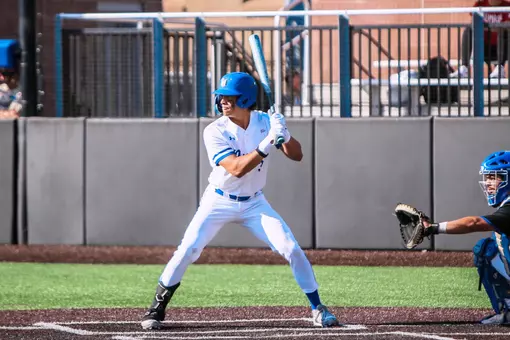
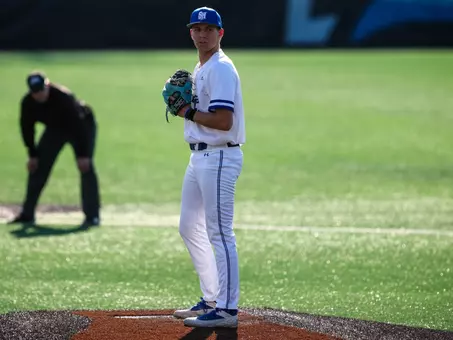
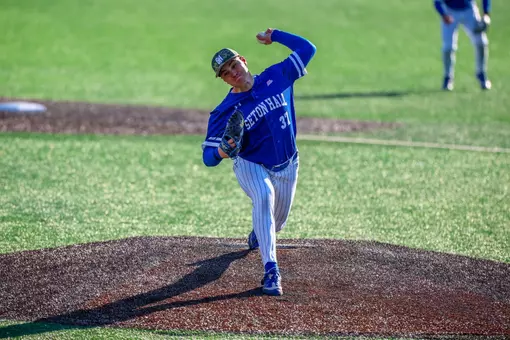
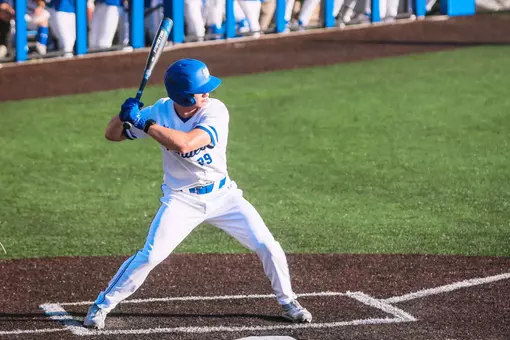
Seton Hall Softball vs. Iona (Game 2)
Wednesday, April 29
Seton Hall Softball vs. Iona (Game 1)
Wednesday, April 29
Seton Hall Pirates Live Stream
Thursday, April 23
2026 Seton Hall Giving Day is Here!
Tuesday, April 21